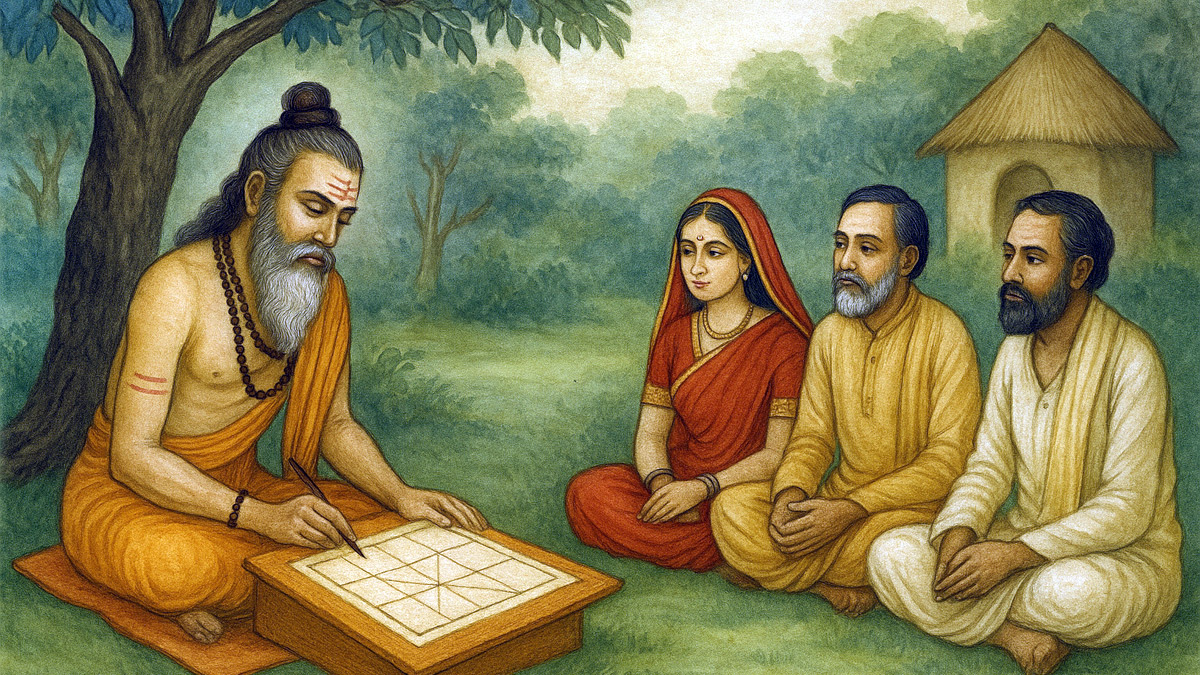
At its heart, Kundali matching involves the astrological analysis of the birth charts (Janam Kundali) of two individuals. A Janam Kundali is a unique celestial map, meticulously crafted based on the precise date, time, and place of a person’s birth. It captures the positions of planets, zodiac signs, and astrological houses at that exact moment. By comparing and analyzing these two individual charts, astrologers aim to predict the compatibility of their destinies.
The practice isn’t just about predicting the future; it’s about understanding the inherent nature, strengths, weaknesses, and potential challenges that each individual brings into the relationship. It offers a roadmap to navigate the marital journey more smoothly, suggesting potential areas of friction and highlighting areas of inherent harmony.
Purpose and Importance
The primary purpose of Kundali matching is to assess the astrological compatibility to ensure a stable, prosperous, and happy married life. In Indian society, where marriage is considered a lifelong commitment, this practice serves as a foundational step. It is believed to:
- Assess Compatibility: Evaluate mental, emotional, physical, and spiritual compatibility.
- Predict Harmony & Longevity: Offer insights into the potential for a peaceful and enduring relationship.
- Identify Potential Challenges: Highlight areas where conflicts might arise due to planetary positions or “doshas” (afflictions).
- Suggest Remedies: Provide astrological remedies or solutions to mitigate negative influences or improve compatibility.
Evolution of Practice: Tradition Meets Technology
In traditional Vedic astrology, Kundali matching began with Lagna (Ascendant) compatibility, not Guna scores. The relationship between the bride and groom’s Lagna lords, their strength, and planetary placements were deeply analyzed first. Only after this came Ashta Koota Milan, used as a supporting tool — not the starting point.
Today, with online tools and apps, many start directly with the 36-point system, skipping this essential step. While digital platforms offer speed, they often miss the nuanced insights that only Lagna-based analysis provides.
Modern couples now see Kundali matching as a guide, not a guarantee — combining tradition with personal compatibility, values, and communication.
The Real First Step: Lagna Matching Before Ashta Koota
While Ashta Koota Milan is popularly cited as the starting point of Kundali matching, seasoned astrologers know that true compatibility analysis begins with the Lagna, or Ascendant. This crucial step is often overlooked by online calculators and automated tools, but in traditional Vedic practice, Lagna Matching forms the foundation of any meaningful evaluation.
Lagna Matching involves comparing the rising signs (Ascendants) of the bride and groom to assess:
- 🔹 The natural friendship or enmity between their Lagnas
- 🔹 The strength of each Lagna, based on planetary placement and aspects
- 🔹 Whether benefic or malefic planets are placed in or aspecting the Ascendant
- 🔹 The Lagnesh (Lord of Ascendant) — its placement, dignity (own sign, exalted, debilitated), and its association with the 7th house of marriage
This evaluation reveals how the personalities and life directions of the two individuals align, something Ashta Koota Milan alone cannot measure. For example, if one Lagna is ruled by a friend of the other’s Lagna lord, and both Ascendants are supported by benefic planets, it suggests a smooth foundation for mutual understanding and harmony.
Only after this Lagna-based compatibility is established, do traditional astrologers proceed with Ashta Koota matching — which, while important, is considered secondary in sequence.
The Second Principle of Kundali Matching (Ashta Koota Milan)
The secondary and traditional method of Kundali matching, particularly popular in North India, is the Ashta Koota Milan (Eight-Fold Compatibility). This system assigns points (Gunas) to eight key aspects of compatibility, with a maximum score of 36. While widely used today, it is important to remember that Ashta Koota is applied only after Lagna (Ascendant) compatibility has been assessed by an experienced astrologer.
A higher Guna score generally indicates better alignment in areas like temperament, health, attraction, and family life — but it does not replace deeper chart analysis based on planetary positions.
A. Understanding the Ashta Koota (Eight Categories/Gunas)
Each of the eight Kootas addresses a specific dimension of compatibility:
- Varna (1 Guna): This Koota relates to the spiritual and professional compatibility based on the individual’s “Varna” (caste/category) as per their moon sign. It indicates the ego compatibility and the potential for a harmonious flow in life’s direction.
- Vashya (2 Gunas): Vashya signifies mutual attraction, power dynamics, and the degree of control or influence each partner might have over the other. It classifies individuals into categories like Manav (human), Vanachar (wild), Chatushpad (quadruped), Jalachar (watery), and Keet (insect).
- Dina/Tara (3 Gunas): Also known as Tara Koota, this assesses the longevity of the relationship, health, and general fortune. It’s determined by the placement of the Moon in relation to the birth Nakshatra (constellation) of each individual.
- Yoni (4 Gunas): Yoni Koota signifies sexual compatibility, intimacy, and progeny potential. It categorizes individuals based on the animal associated with their birth Nakshatra, indicating inherent behavioral traits and natural instincts.
- Graha Maitri (5 Gunas): This is a crucial Koota, evaluating intellectual compatibility, friendship, and mutual understanding between the partners’ ruling planets. It assesses the natural affinity and a sense of shared purpose.
- Gana (6 Gunas): Gana Koota determines temperamental compatibility and disposition, classifying individuals into Deva (divine, virtuous), Manava (human, balanced), or Rakshasa (demonic, aggressive). It indicates how well their fundamental natures will blend.
- Bhakoot/Rashi (7 Gunas): Also known as Rashi Koota, this is a highly significant factor, contributing 7 Gunas. It assesses the financial well-being, family welfare, and overall prosperity of the couple. Discrepancies here can lead to “Bhakoot Dosha,” which is considered a major affliction related to financial issues, family disputes, or even loss of progeny.
- Nadi (8 Gunas): The most critical of all Kootas, Nadi accounts for 8 Gunas. It relates to genetic compatibility, health, and the potential for healthy progeny. There are three types of Nadi: Aadi (initial), Madhya (middle), and Antya (final). Matching individuals with the same Nadi is considered highly inauspicious and leads to “Nadi Dosha,” which can impact the couple’s health and the well-being of their children.
B. Calculation of Gunas
The Gunas from each of the eight Kootas are summed up to arrive at a total score out of 36.
C. Significance of Total Gunas
While there is no universally fixed “passing” score, general guidelines are:
- 18 Gunas or less: Considered poor compatibility; marriage is generally not recommended.
- 18-24 Gunas: Average compatibility; marriage may be considered with some remedies or careful consideration of other factors.
- 25-32 Gunas: Good compatibility; highly recommended for marriage.
- 32-36 Gunas: Excellent compatibility; considered highly auspicious for marriage.
However, it’s crucial to understand that the total Guna score is just one aspect. The presence or cancellation of “doshas” (afflictions) often carries more weight than the raw score.
Key Astrological Considerations Beyond Ashta Koota
While Lagna & Ashta Koota Milan provides a foundational assessment, a thorough Kundali matching involves a deeper dive into specific planetary positions and potential “doshas.”
A. Mangal Dosha (Kuja Dosha)
Perhaps the most talked-about “dosha,” Mangal Dosha occurs when the planet Mars (Mangal or Kuja) is placed in specific houses (1st, 2nd, 4th, 7th, 8th, or 12th) in a person’s birth chart from the Lagna (ascendant), Moon, or Venus. It is widely believed that a “Mangalik” individual marrying a non-Mangalik can lead to marital discord, financial troubles, or even the untimely demise of the non-Mangalik spouse.
Common Misconceptions and Fear-Mongering: The fear surrounding Mangal Dosha is often exaggerated. Many astrological texts provide for its cancellation under various conditions, such as:
- When both individuals have Mangal Dosha.
- When Mars is in its own sign or exalted.
- Specific planetary aspects or placements that negate the dosha.
- Rituals like “Kumbh Vivah” (symbolic marriage to a tree or idol) are sometimes performed, though their efficacy is debated.
B. Nadi Dosha
As mentioned, Nadi Dosha arises when both partners belong to the same Nadi (Aadi, Madhya, or Antya). This is considered a serious affliction, believed to impact progeny, lead to health issues in children, or even sterility. While severe, some astrological texts discuss potential cancellations if other powerful benefic yogas are present or if there are certain planetary conjunctions.
C. Bhakoot Dosha
This dosha occurs when the Moon signs of the prospective couple are in a 6/8, 9/5, or 12/2 relationship. It can severely impact financial stability, lead to frequent quarrels, and create obstacles in family life or progeny. Similar to other doshas, certain planetary positions or a very high Guna score in other Kootas might mitigate its effects.
D. Other Planetary Doshas
Astrologers may also consider the impact of other planetary afflictions, such as:
- Shani Dosha: Afflictions caused by Saturn, which can bring delays or challenges.
- Rahu-Ketu Dosha: Impact of the lunar nodes on marital harmony.
- Kala Sarpa Dosha: A specific planetary alignment where all planets are hemmed between Rahu and Ketu, sometimes believed to cause significant life challenges, including in marriage.
E. Strength of Houses & Planetary Placements
Beyond individual doshas, a comprehensive analysis involves examining the strength of the:
- Lagnesh (Lord of the Ascendant): Indicates the individual’s overall personality and vitality.
- 7th House and its Lord: The 7th house governs marriage and partnerships. Its strength and the placement of its lord are crucial for marital success.
- Placement of Benefic and Malefic Planets: The houses occupied by auspicious (e.g., Jupiter, Venus) and inauspicious (e.g., Saturn, Mars, Rahu, Ketu) planets can significantly influence marital harmony and the nature of the relationship.
The Process of Getting Kundali Matched
A. Required Information
To get an accurate Kundali matching done, you will need the precise birth details for both individuals:
- Date of Birth: (DD/MM/YYYY)
- Time of Birth: (HH:MM AM/PM) – This is critical as even a few minutes can change the Lagna (ascendant).
- Place of Birth: (City, State, Country)
B. Where to Get It Done
- Reputable Astrologers (Jyotishis): The most traditional and often recommended approach. A skilled astrologer can provide nuanced interpretations and personalized advice.
- Online Kundali Matching Platforms: Numerous websites offer instant Kundali matching. While convenient for an initial Guna score, they often lack the depth of interpretation provided by a human astrologer and may not accurately account for all dosha cancellations or specific regional astrological variations. Use them as a preliminary tool, not a definitive verdict.
C. Interpreting the Results
A good Kundali matching report goes beyond just the Guna score. It should:
- Clearly list the Gunas obtained in each of the eight Kootas.
- Highlight the presence or absence of major doshas (Mangal, Nadi, Bhakoot).
- Discuss the overall planetary compatibility and any significant yogas (benefic combinations) or arishtas (malefic combinations) impacting marriage.
- Offer recommendations for remedies, if necessary.
- Most importantly, a human astrologer will interpret these points in the context of the individuals’ lives, guiding the families on the path forward.
Common Misconceptions and Ethical Considerations
A. “Higher Gunas = Guaranteed Success” Myth
This is one of the biggest misconceptions. While a higher Guna score is desirable, it does not guarantee a successful marriage. The quality of a relationship depends equally, if not more, on the couple’s efforts, understanding, and love. Many happy marriages exist with moderate Guna scores, while some with high scores face challenges.
B. Fear-Mongering by Astrologers
Unfortunately, some practitioners exploit the anxiety surrounding doshas, particularly Mangal Dosha, to instill fear and demand exorbitant fees for unnecessary remedies. It’s crucial to seek advice from ethical and experienced astrologers who provide balanced and reasoned interpretations.
C. Role of Free Will and Karma
Vedic astrology acknowledges the interplay of destiny (karma from past lives) and free will (actions in the present). While Kundali matching points to inherent tendencies and potential challenges, it doesn’t negate the power of individual effort, mutual respect, and a willingness to work through difficulties.
D. Blind Faith vs. Informed Decision
Approach Kundali matching with an open mind, but not blind faith. Use it as a guiding tool to gain insights, but always combine it with practical considerations, communication, and mutual understanding between the partners.
E. Gender Bias and Historical Context
Historically, Kundali matching sometimes contributed to gender bias, with the onus of “matching” often falling more heavily on the bride’s family. While society is evolving, it’s essential to ensure the practice is applied equitably, fostering true partnership.
F. When to Seek Matching
While some families prefer matching early in the alliance process, others opt for it after the individuals have met and developed an initial rapport. There’s no fixed rule, but matching before deep emotional attachment can help avoid complex situations if major incompatibilities are revealed.
Beyond Astrology: The Human Element in Marriage
Ultimately, a truly harmonious marriage is built on more than just planetary alignments.
A. Beyond the Stars: A Tool, Not a Determinant
Kundali matching is a valuable tool from the ancient wisdom of India, offering profound insights into the astrological compatibility of a couple. However, it is a guide, not a definitive predictor or sole determinant of marital success.
B. Importance of Other Compatibilities
For a fulfilling marriage, it’s vital to consider other crucial aspects:
- Emotional Compatibility: Do they understand and support each other’s feelings?
- Intellectual Compatibility: Can they engage in meaningful conversations and respect each other’s opinions?
- Shared Values and Life Goals: Do they have similar perspectives on life, family, finances, and future aspirations?
- Communication Skills: Are they able to communicate openly, honestly, and effectively?
- Family Background and Upbringing: While not astrological, understanding each other’s family values and cultural background is crucial for integrating into new families.
C. Personal Connection and Love
The bedrock of any successful marriage is genuine love, mutual respect, trust, and a willingness to compromise and grow together. These human elements are paramount and no astrological chart, however perfectly matched, can substitute for them.
Final Recommndation
Kundali matching, with its roots in ancient Indian astrological wisdom, continues to be a revered practice in the journey towards marriage. It offers a unique lens through which to understand the inherent compatibility of two souls, providing insights into potential challenges and strengths.
By understanding the principles of Ashta Koota Milan, the significance of doshas, and the nuances of astrological interpretation, individuals and families can approach this tradition with confidence and clarity. However, it is essential to remember that Kundali matching is a complementary tool. The most enduring marriages are ultimately forged through mutual respect, deep understanding, open communication, shared values, and the unwavering commitment of two individuals to build a life together, regardless of what the stars might initially indicate. Embrace the wisdom of the stars, but always let love and conscious effort lead the way.